Indian National Anthem
The Constituent Assembly adopted the Indian national anthem from a song written and
composed by the Nobel laureate Rabindranath Tagore on January 24, 1950. Before this Vande Mataram written by Bankim Chandra Chattapadhya was the National Anthem of India.
Later Constituent Assembly of India,( Vol.XII, 24-1-1950) opined: "The composition consisting of words and music known as Janaganamana is the National Anthem of India, subject to such alterations as the Government may authorize as occasion arises, ..."
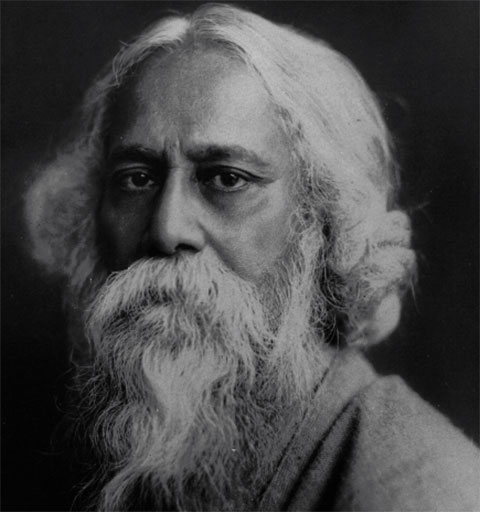
Only the first of the five stanzas was designated as the anthem.
The anthem goes:
Jaana Gaana Maana Adhinayaka Jayehe
Bharata bhagya vidhata;
Punjaba Sindhu
Gujarata Maratha,
Dravida Utkala Banga,
Vindhya, Himachala,
Jamuna, Ganga,
Ucchhala Jaladhitaranga;
Taba Shubha Naame
Jaage
Taba Shubha Ashish Maage
Gaye taba jaya gaatha.
Jana
gana mangala dayaka jaya he
Bharata bhagya vidhata.
Jaya he, jaya he, jaya he,
Jaya jaya jaya, jaya he!
The English rendition of the song goes like this:
Thou art
the ruler of the minds of all people,
Dispenser of India's
destiny.
Thy name rouses the hearts of the Punjab,
Sind,
Gujarat, and Maratha,
Of the Dravid, and Orissa and Bengal.
It
echoes in the hills of Vindhyas and,
Himalayas, mingles in the
music of the
Jamuna and the Ganges and is chanted by
the waves
of the Indian sea.
The pray for the blessings,
and sing by the
praise,
The saving of all people
waits in thy hand.
Thou
dispenser of India's destiny,
Victory, victory, victory to
thee.
The Anthem in Hindi (हिंदी):
जन-गण-मन अधिनायक जय हे,
भारत भाग्य विधाता ।
पंजाब-सिन्धु-गुजरात-मराठा,
द्राविड़-उत्कल-बंग
विंध्य हिमाचल यमुना गंगा, उच्छल जलधि तरंग
तब शुभ नामे जागे,
तब शुभ आशिष मांगे
गाहे तब जय गाथा ।
जन-गण-मंगलदायक जय हे,
भारत भाग्य विधाता ।
जय हे, जय हे, जय हे,
जय जय जय जय हे ।


 Ram Navami
 Passover
 Personal Finance Guide
 Multifaceted Blog
 Good Morning
 Dating