
On the 5th of November, the king and his leaders were about to meet. So, Guy Fawkes men placed barrels of gunpowder in one of the cellars beneath the building where the king was having his meeting. Guy Fawkes was to light the fuse that would set off the explosion. But the plot was discovered before he had a chance to do this. The king was saved, and Guy Fawkes was hanged.
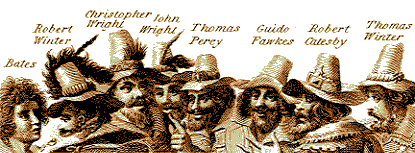
Ever since, Guy Fawkes Day has been a time for merrymaking. It is a holiday that both children and adults can enjoy. And the fun really begins when darkness falls, then "the "Guy" is tossed onto the bonfire, and set alight. Then the fireworks go off, and "the Guy" goes up in a flames.
As early as 1607 there are records of bonfire celebrations on the 5th of November. James I had declared the day a public holiday in his joy at the overthrow of the Gunpowder Plot.
Children would often blacken their faces with the ashes on Bonfire night, in imitation of Guy fawkes who it was believed to have done this also, to try to camouflage himself.
It is not certain when "the guys" were first introduced, but it did happen during the reign of James I, and after the reign of Charles II, children made "the guys" a few days in advance of the event, and paraded the streets with it chanting, "a penny for the guy", often it is pushed around in a old pram or leaning up against the wall, at street corners. And this still happens today.
As well as burning "the guys" the bonfires were used to cook the potatoes, and this custom can be traced back many many years. For weeks, large potatoes - 'roasters' as they were called in Derbyshire, were stored in readiness for 'Bunfireneet'. Some potatoes weighed as much as half a pound and there was nothing nicer or so the locals thought, than eating a hot floury roaster with just a 'pinch o' sawt', with the glow of the bonfire on your face and the merry jests and chants of the party around you.
Many of England's best-known traditions involve the royal family. Some people in England object to the monarchy because they believe that it contributes to the continuation of the class system. But most English people believe that the monarchy provides a link with their nation's great history.
One royal tradition is the annual State Opening of Parliament. On this day, spectators line London's streets to watch the queen ride to Parliament in her magnificent horse-drawn state carriage. Another impressive royal ceremony is Trooping the Colour. This ceremony takes place each June, when the queen reviews her troops.
Two famous English traditions date back to 1605, when a man named Guy Fawkes led a group that tried to blow up King James I and the Houses of Parliament. Ever since then, guards from the Tower of London have searched the Parliament cellars on the opening day of each annual session. The guards, who are also called yeomen of the guard or beefeaters, are supposed to make sure there are no kegs of gunpowder in the cellars. The people celebrate Guy Fawkes Day on November 5. During the celebration, children make stuffed dummies called guys and use them to collect money, requesting "A penny for the guy." In the evening, there are fireworks displays throughout the country. The guys are burned on great bonfires at these displays.
See GUNPOWDER PLOT.
Tea time is a famous English tradition though it has largely died out in recent years. At about 4 p.m. every day, people who have the time pause for a cup of tea and a snack.
Looking for Something? Search Google :
 Mother's Day
 Passover
 Personal Finance Guide
 Multifaceted Blog
 Good Morning
 Dating